Friday, June 19, 2020

Book Review: Soldier Dogs, Book 2: Skipper: Attack on Pearl Harbor (USS West Virginia, hero boy and dog)

Soldier Dogs: Attack on Pearl Harbor (Skipper), by Marcus Sutter (Harper Collins/Children, 2018, 167 pages, $7.99, grades 3-7, ages 8-12)


History Comes Alive Again With a Canine Hero

Soldier Dogs is a series that teaches more history than a history book! Skipper, a Labrador Retriever, was left on a beach in Hawaii, abused and abandoned. She became an independent ‘dock dog’ and strong swimmer, and found a new owner, Joe, whose father was the black head cook on the USS West Virginia.

Fun, Inspiring and Totally Exciting

Each chapter features a different drawing of Skipper. Perhaps the reader can determine if it foreshadows what will happen. In addition, much of the book is told from Skipper's point of view, in the dog's own words.

Boys will learn about the Navy and ships and each book also has a girl. Millie is a Hawaiian girl who makes leis for the soldiers and sailors out of shells that Joe and his bud Kai search for on the shore.

Time after time, Joe and his dog find themselves in danger or separated and have to learn to trust each other. “She [Skipper] needed to get to Joe. She wouldn’t rest until she did. That’s when it hit her: she was why she was here.” (p. 62)

Made-Up Words and Combinations

New vocabulary introduced includes wheel machine while new phrases include “smell the morning.” Book 1 had ‘listen to the street.’

In a scene with Joe’s father aboard the ship, “Skipper led him down the corridor, deeper into the ship. They had other masters and pups to save, including Joe but maybe – just maybe – they had a chance of doing it , as long as they did it together.” (p. 89)

Hero of Pearl Harbor


In this second book we have a stowaway, enlisted sailors, an abandoned dog, a birthday surprise, the bombing of Pearl Harbor and more, that take place primarily in a couple of hours on a Sunday morning in far-off Hawaii.

Skipper’s story will give you plenty of history slid unobtrusively into a fascinating adventure, along with a poster of Skipper, a Q&A, a timeline, facts about Dogs for Defense, and more!

What We Would Have Changed

In the first book, author Marcus Sutter used the now not-preferred terms, pack and alpha and master, the latter repeated here. DogEvals in the past has written to authors about such outdated terms and may do so again.

As in Book 1, Sutter again uses pup (or boy-pup) and master to describe the boys (and young men) and men in the stories (and girl-pup).

Why Seven Books in the Series?

Are you wondering why none of the books in this series stars a golden retriever? It turns out that seven breeds of dogs were preferred by the military in WW2. Families would donate their pet dogs to a program called Dogs for Defense. Those breeds are listed below.


Skipper's story will give you plenty of history slid unobtrusively into a fascinating adventure, along with a poster of Skipper, a Q&A, a timeline, facts about Dogs for Defense, and more!

Fun Fact

Each book includes a few pages of the next in the series. Can you spot the error about Book 2 in the bonus section included in Book 1?

----------------
Caveat: This book was purchased for review.
Next: Stryker, Capture the Island


The complete series, each with a poster of the dog:
2. Skipper – Attack on Pearl Harbor (Labrador Retriever)
3. Stryker – Capture the Island (Doberman)(Secret Mission – Guam)
4. Ace – Victory at Normandy (Boston Terrier)
5. Boss – Battle of the Bulge (Alaskan husky)
6. Buster – Heroes on the Homefront (yellow lab)
7. Jack - Shipwreck on the High Seas (Boxer)

Monday, June 8, 2020

How to Determine if You Will Contract COVID-19

How to Determine if You Will Contract COVID-19


A Little (about virus size) Light-Hearted Coronavirus Formula for “Opening Day” of Phase Three, or, The Ex-Geneticist Strikes Again (maybe that's why she is an ex)(and, yes, a dog is mentioned)

Let DI be distance (DI = DIstance, get it?) in feet from you to another person. Let DU be the duration you are at said distance in minutes. Let DS be whether or not the other person at said distance for said number of minutes is infected by the virus in question for at least 2 days (+ 2 for infected, - 2 for not infected – but you may not know) and let LO be the location of this assignation (+2 for outside, - 2 for inside)(note: L-oh not L-zero).

Factor in the additional unknowns of humidity (H in percent, ideally to be high), temperature (T in degrees Kelvin, ideally to be a large number), wind speed (W in mps, ideally to be great) and elevation (effect UNK at this time, therefore X).

Don’t forget to include M for whether or not the other person is appropriately masked (ideally a positive number), G for the person in question’s gender (+2 for male, +1 for female), age (self-explanatory), and pre-existing condition (a constant of 1 for hypertension, 1 for obesity, 1 for diabetes, 1 for asthma, and 1 for being a cancer survivor).

Ideally, you want DI to be 6 or greater (DI>6 – “where oh where is the greater-than-or-equal-to sign on my Mac?”); DU to be 15 or less (DU<15, ditto); DS to be - 2; and LO to be +2.


Therefore, the probability of your contracting the novel Coronavirus (nC) responsible for COVID-19 at any given time is:

p(nC) = ADI ft x BDU* min x DS x  LO x CH(%) + DT(K) + EW mps + XE + M + G + (HODAC) x Z, Z being the prevalence in the population

E.g., for my dog training lesson this afternoon at 5 pm,
p(nC) = 5ft x 20min x (-2) x (+2) x 70% + (80 + 459.67)(5/9) + 0.1mps +XE + 1 + 1 + 4

*note: BDU here does NOT stand for Battle Dress Uniform, the “cammos/fatigues” worn by US soldiers. Instead, B is a constant and DU is duration (time, for the layman)


PS – I would have made part of the equation squared and cubed but typing superscripts takes so long. . . . however, that would make the equation more valid and reliable – and precise though not necessarily accurate. However, this current equation is a good approximation. However, note that I did not include singing, coughing, sneezing or shouting – just exhaling and speaking because I got tired of this exercise! However, I do hope you enjoyed it! However, I also did not include the interactions of all the above unknowns with each other, one at a time or two at a time or . . . .

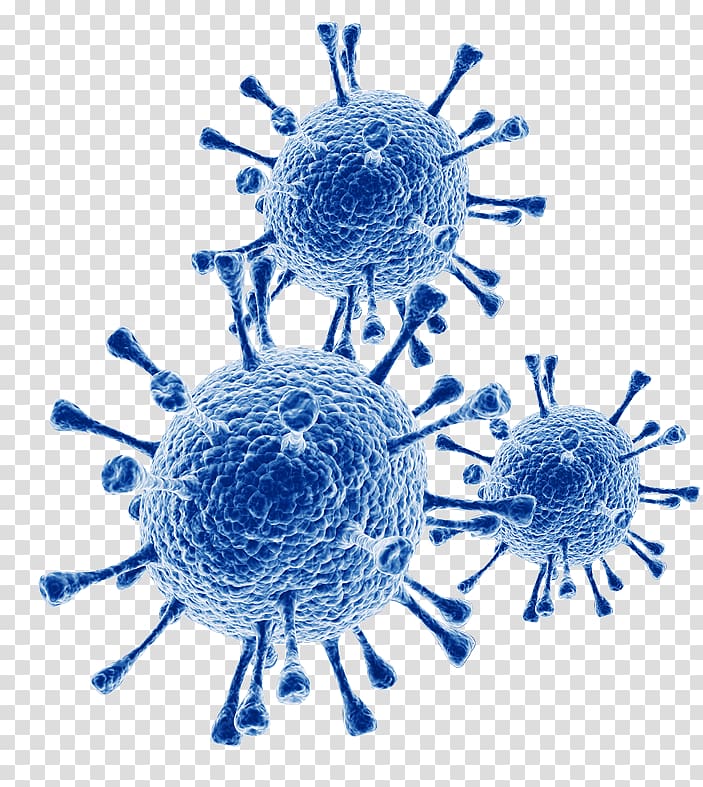
(Graphics: http://clipart-library.com/coronavirus-clipart.html)

Saturday, June 6, 2020

Book Review: Soldier Dogs, Book 1 (London, WW2, adventures, super dog, middle school)

Soldier Dogs: Air Raid Search and Rescue (Chief), by Marcus Sutter (Harper Collins/Childrens, 2018, 218 pages, $7.99, grades 3-7, ages 8-12)


History Comes Alive Painlessly in Exciting Canine Adventures

Soldier Dogs is a series that teaches more history than a history book! Start with Chief, a German Shepherd Dog belonging to Eric who enlists during WW2 just as his family is moving to England. Twelve-year-old little brother Matt ‘inherits’ the dog and becomes a big brother himself to foster sister Rachel, a Kindertransport girl.

The kids are caught up in a bombing raid one night in Canterbury where they live and become separated from both Chief and their parents. The twists and turns that transpire will keep you reading breathlessly as they find a German soldier, are trapped in the rubble, and discover that Chief has a superpower! Matt has to grow up quickly as he feels responsible for Rachel yet is still so young himself.

Fun and Inspiring

Each chapter features a different drawing of Chief. Perhaps the kid-reader can determine if it foreshadows what will happen.

In addition, much of the book is told from Chief’s point of view with those sections alternating with Matt’s narrations. The boy’s thoughts are made known to the reader and depict a conflict between those of a child and those of someone forced to grow up suddenly. Matt learns a lot about himself and matures considerably in a short period of time – most of the book is set in one night so you can imagine how the many plots must be exciting!

Made-Up Words

New vocabulary, too! The reader will learn about girl-pups and boy-pups and fire-rocks and long-paws and iron-birds and perhaps the following quotes will even spark a conversation or two:

Matt yawned and said, “See you in June,” because it was the last day in May, and it would be June 1st in the morning. (p.14)

. . . Chief knew that humans didn’t have any sense. That’s why they needed dogs to look after them. (p.54)


Matt. . . reminded Chief of himself as a pup. . .  The mother and father were just old. Chief always tried to let them pretend they were in charge. . . The older boy had raised Chief. Eric. He was partly a father to Chief, partly a brother, and partly a pup. The humans couldn’t hear the loudest noises, they couldn’t smell the strongest scents. They shivered in the wind and barely had any teeth at all. They were so useless sometimes! They needed a dog to look after them. (p. 23)

Chief licked the man’s cut. Humans weren’t very good at licking their own wounds, so you needed to take care of that for them. (p. 96)

A couple of furless human pups weren’t safe. . . not without a dog to help them. (p.113)

Quite the Adventure

Chief’s story will give you plenty of history slid unobtrusively into a fascinating adventure, along with a poster of Chief, a Q&A, a timeline, facts about Dogs for Defense, and more!
----------------
Caveat: This book was purchased for review.

Next: Soldier Dogs, Book 2, Skipper, Attack on Pearl Harbor (Labrador Retriever)

The complete series, each with a poster of the dog:
1. Chief – Air Raid Search and Rescue (GSD)
2. Skipper – Attack on Pearl Harbor (Labrador Retriever)
3. Stryker – Capture the Island (Doberman)(Secret Mission – Guam)
4. Ace – Victory at Normandy (Boston Terrier)
5. Boss – Battle of the Bulge (Alaskan husky)
6. Buster – Heroes on the Homefront (yellow lab)
7. Jack - Shipwreck on the High Seas (Boxer)

Monday, June 1, 2020

Distance, Duration, Disease - and Location

1 June

DISTANCE, DURATION, DISEASE, and LOCATION (D3L).


Introductory Risk Assesment 101

Dog trainers speak of the 3D’s of distance, duration, and distractions (sometimes with ‘difficulty’ thrown in). Now we have the problem of coming up with a similar way to remember the factors associated with opening the economy and facing up to a possible endemic level of COVID-19.

These factors include distance, duration, disease, and location.

As we begin to re-open, how are those decisions made by our local governments and by ourselves?

Remember that this epidemic rapidly became a pandemic and, most likely, at some time in the future, COVID-19* will become endemic. This means that the novel Coronavirus and the disease it causes, COVID-19, will remain with us at a much lower level.

1. DISTANCE

Keep your distance from people. If you are out for a dog walk and see someone coming, cross the street or step onto the grass and turn your head away. Remember the safe distance was increased early from three feet to six feet.

How far away is six feet?

The length of a regular leash or the length of two golden retrievers or twice the distance of your outspread arms (the distance from one outspread arm to the tip of your nose is about a yard [three feel]).

Do you notice that some people stand too close to you but you are too embarrassed to either ask them to maintain ‘social distance’ or to move away yourself? It is not a matter of ‘feeling uncomfortable’ but of feeling safe. Just do it!

Try turning at least your head away if you pass someone in the grocery store. This may be easier for introverts – to avert one’s gaze – than for extroverts and also easier if the other person is not too interesting-looking.


More virus can be spread further with a sneeze or a cough than with speaking or merely breathing, but even with speaking and breathing. Also, with forced exhalation (sneeze, cough, speaking, breathing – in that order), the particles are forced horizontally more than vertically downward at first. Eventually they all do travel downwards and land on surfaces which is why we must not forget about disinfecting surfaces often (doorknobs, fridge handles, faucets, phones, remotes, etc.)

2. DURATION

Duration refers to the amount of time spent in the vicinity of another person. For example, the choir practice** in Skagit County, Washington, on 10 March 2020, lasted 2 ½ hours. Sixty-one people took part including one asymptomatic person, resulting in 32 confirmed cases, 20 probable cases, 3 hospitalizations, and 2 deaths.

Remember the Ten

The magic number seems to be 10*** minutes. After 10, your chances of ‘exchanging’ viral air with someone increases. People in crowded restaurants lingering over a great meal with close friends or employed in open floorplan seating offices (without even partial walls) where one works  for eight hours are especially vulnerable.


Strive for Five!

So, although the magic number may be ten minutes, strive for five!

How about Grocery Shopping?

Grocery stores tend to be large and shoppers tend to keep moving. Many stores have one-way aisles now (I actually met a man who apologized for going the wrong way! It turns out he had been chastised earlier for doing this by another shopper.) Health professionals suggest you write out your list and shop quickly, preferable with a credit card and checking yourself out along with bagging yourself. The fewer interactions, the better.

On the other hand, employees in stores are in the same workspace (although large) for several hours and pass by numerous people (although for very short periods of time). They are, however, and fortunately, often sanitizing. We are learning.

3. DISEASE

We know by now that after contracting (inhaling) the virus, it can take from 2-14 days or more for enough of the virus to replicate to show symptoms. The average is 4-5 days. So, if the person next to you is infected but doesn’t yet know it, the situation is potentially dangerous. Therefore, suspect everyone of being infected, even if they have tested negative for the virus – a test is only a snapshot in time and means that the person did not have COVID-19 at the time the sample was taken. The next day, that person could have enough viral particles to show symptoms.

More virus can be spread further with a sneeze or a cough than with speaking or merely breathing, but even with speaking and breathing. Also, with forced exhalation (e.g., a sneeze), the particles travel horizontally more than vertically downward at first. So, mask up to deflect the virus away from others.

And let’s not forget the weather or air currents.


4. LOCATION

Stay outside when possible. If you are inside, open the windows for cross-ventilation: do not depend on AC or heating that merely recycles the same old air. Most air conditioning systems currently do purify the air or bring in air from the outside as well as cool it and circulate it.

So, if you must go out to eat, look for open-air seating or use take-out (take-home or eat in your car). Maintain social distance. Wear a mask to protect others and to deflect air downward rather than outward. And, of course, wash your hands (more on that later) and Stay Home, Stay Safe!

Check back here (I may not have time to write such long COVID-19 blogs every day, though, like yesterday and today) for information on risk assessment, the biology of viruses, what is a temperature, where not to touch on your face, symptoms, and the art and science of hand-washing!

Yesterday: Is it really about re-opening the economy? An ex-geneticist speaks.

(Graphics: http://clipart-library.com/coronavirus-clipart.html)
 _____________________________

*COVID -19 – COronaVIrus Disease. The 19 refers to the year 2019, when the disease was first detected.
**CDC: Morbidity and Mortality Weekly Report, 15 May 2020, 69 (19): 606-610

Sunday, May 31, 2020

The ex-Geneticist Speaks about Re-opening America (OT)

Re-opening, America?


It’s Not the Economy, Stupid!

Ditch That Phrase: ‘Open the Economy.’

“Damn the torpedoes, full speed ahead.”

“We’ve got a lot of livin’ to do!” A lot of time to make up for. We’ve been punished long enough.

I am a scientist: therefore, I am conservative, especially with my health. I wear a hat when I go outside, I wear long pants and (usually) I wear a long-sleeved shirt because “The Sun is Not Your Friend.” Especially if you are a cancer survivor.

Yes, I am high-risk, a senior citizen as well, that some might call elderly, but I was also trained as a scientist. Therefore, I am or strive to be objective. I believe in proof, in facts, in truth, in science being self-correcting.

The health experts have gone back on their recommendations during the current crisis. Does this mean they are never to be trusted again, as some would have us believe? Nope, it means that they have found out new things about this new virus who is slowly revealing itself to us. We are slowly honing in, becoming more accurate in our guesses, learning about this new and deadly critter.

Remember, how, at first, only a few weeks ago, we were told that wearing a mask was a waste of good masks and that we should save them for the health professionals? Even I thought they were unnecessary and that it was foolish to wear them since the virus is so small* it could get through the weave of the mask.


Then we found out that the viral particles become aerosolized and are coughed or sneezed or shouted or sung or talked or even exhaled in droplets of saliva (and other liquids) that spread out in 3-D before falling slowly to earth.

So now I think of a mask as a deflector of viral particles – it deflects the virus in droplets down toward the earth first before spreading out and people tend not to breathe on the path my exhaled viruses take on their way down there. There are now fewer particles spread out from my mouth and nose about five feet above the earth.

Words are Powerful

Words are powerful so choose them wisely.

We are not ‘re-opening’ our economy or ‘opening’ our economy as much as opening up our society. Currently much of our society lies ‘hidden’ or should be according to either the law or recommended guidelines.

Two Alternatives

But, as time has gone on, have we actually become safer or did we just get tired of staying home? I think the latter. We are so desperate for that good economy that we so rightly deserve that we are willing to sacrifice a few souls, as long as we don’t know them or they are elderly already. (Oops, that’s me.)


We are desperate to return to normal. Except for the minority of us who are introverts – the quarantine can never last long enough for us to be comfortable!

However, there is a third alternative: we are closing in on the virus, finding out where it really is via testing (identifying) and contact tracing, finding out where it has been or is, lying dormant thereby allowing those areas that are virus-less to return to normal, but slowly because we aren’t quite sure just yet.

Party and Protest!

We don’t want to stay home any longer. It’s boring. No action. No life. We have suffered enough. Let’s party!

To hell with that little bugger of a bug. He won’t get me! I am invincible. (Until the day when I’m not – and it’s all downhill from there. But that’s tomorrow and tomorrow never comes.)

We are young. We will live forever. People are going to beaches, they are playing pick-up football and they may very well be OK doing so. Most of them.

What our society is doing is not so much opening up but focusing the closing and opening to the locations that require closures or openings. We are becoming more focused and accurate in our identification of where the virus is and what is does – and how.

We are opening up rural communities because we are finding they don’t have much COVID-19 out there in the country. We are allowing small groups of healthy people to gather for short periods of time outdoors because we have learned more about our new ‘friend,’ the novel Coronavirus: we have learned that the virus ‘travels’ short distances (most likely less than six feet horizontally) and it takes a lot of it to get sick.


We are told we can open the economy or re-open the economy but there is no word about opening up our society. Is there a difference? You betcha! For me, at least. What about you? Safe or sorry?

*How small is small? Well, we can’t see most of the cells in our body because they are too small. We can’t see bacteria because they are about a tenth the size of a cell. We can’t also see a virus because it is about a tenth the size of a bacterium. That’s how small small really is.

Tomorrow: Distance, Duration, Disease and Location (D3L)

Friday, May 29, 2020

Book Review: Bringing Vincent Home, part 1 (Viet Nam Conflict, Army burn ward, Baltimore family)

Bringing Vincent Home, by Madeleine Mysko* (Plain View Press, 2007, 182 pages, $14.95)


Divided Nations, Divided Families

The Viet Nam Conflict of the 60s and 70s divided the nations of both Viet Nam and the United States as well as dividing many families: the one depicted in Bringing Vincent Home is no exception. The (fictional) Duvalls of Baltimore represent us all: they are a microcosm of our county during that era, superimposed on a highly individualized story of one soldier, wounded in action. The Duvalls represent those who are single mothers in the 50s and 60s, war protestors, writers for the Baltimore Sun, pre-med majors, good Catholics, athletes, nurses and nurses in training, doctors, burn victims, and, of course, soldiers.

Lyrical, Melodic, Comforting and Immensely Likable!

Author Madeleine Mysko’s prose is easy-going with nearly all the characters interconnected in a natural relaxing way. You will not be surprised to learn that she is also a poet (Crucial Blue)
in addition to being a novelist.

Amazingly, the reader learns the backstory of the many major characters that travel tin and out through the novel, amid the heat of San Antonio’s Army base with Brooke Army Medical Center (Bamcee). And yet, the minor stories set the stage, and the soldiers and Army nurses are real and likable, and, of course, inspiring yet human.

Bringing Vincent Home is perhaps the only book I have reviewed in the past eight years online (and longer, in print) without chapter titles, which seemed quite appropriate. I often play the game of creating my own chapter titles if they are not provided but the Vincent book was perfect with chapters being numbered only. Many began with a page or so of reminiscing back to Vincent’s childhood times before focusing on the here and now of 1968 San Antonio, Texas, of a military base, of a hospital. There is so much growing-up to do before “bringing Vincent home,” even by his mother.

The Plot

The reader does not know if Vincent will survive the painful daily burn treatments (debridements) and the surgical grafts he must undergo. The reader does not know if Vincent’s mother will have to return to Baltimore to wait for her son’s transfer to the VA hospital system or if she will return alone to grieve.

Some will think the story ends rather abruptly but not all readers will agree. Sometimes we each have to finish the story in our own way. However, the author has given us an epilogue, which was not necessary - but neither was it surprising in how the lives of the numerous main characters turned out – the sign of a well-thought out story.

Bringing Vincent Home is a book I will take down from my bookshelf at least once a year to read again.
----------------
Caveat: This book was a selection of the Veteran’s Book Group, a program at the Howard County, MD, Public Library.

* Madeleine Mysko also authored two books of poetry: Crucial Blue and In The Margins

as well as the longer 2015 novel Stone Harbor Bound.
A former burn-unit nurse in the Army, Mysko currently teaches writing in the Baltimore area.

Thursday, May 28, 2020

Movie Review: Think Like a Dog (science project, nerd, middle school crush, kidnapping, technology, dogs)

Think Like a Dog: A Family Comedy Starring Man’s Best Friend (Lionsgate, 2018 [on DVD and blu-Ray June 9, 2020], Family/Comedy PG, 91 minutes, about $20). Also, Digital and On Demand. Website: https://www.lionsgate.com/movies/think-like-a-dog 


Parent Trap Redux

Definite chemistry exists between Josh Duhamel and Megan Fox with a screen debut by an incredible young actor, Gabriel Bateman, playing their son, Oliver (with his sidekick and conversational canine Henry).
A Boy and His Dog
Gil Junger’s Think Like a Dog is soon to be available (June 9) to watch over and over again by the whole family. For now, here is the trailer.

What’s a movie without a little romance between budding tech-scientist Oliver and fellow dog-lover Sophie? To make life even more convoluted, Dad is a soccer coach with a job offer from a university three hours away but no 12-year-old kid wants to move and our young hero is no exception, especially since he is hard at work trying to get his parents back together again. 

At the Dog Park

A Boy and His Dog. And a Science Project Gone Awry.

Yay for nerds! And here is a whole middle school full of them, with a few bullies thrown in for teaching life lessons. Unfortunately, or fortunately, Oliver’s science project bombs in front of he tech-hero. He is shown collaborating with a young colleague in China but then comes the kidnapping. . . . and dogs to the rescue, a la Lady and the Tramp  or 101 Dalmatians!

Great House, Great Bedroom!

Personally, I love the indoor dog door that opens when Henry barks. Look for it in Oliver’s really cool room in his really cool house.


Also included in the Blu-Ray, Digital and DVD are the special feature audio commentary with writer and director Gil Junger and  featurette: Anything is Paw-sible: Making Think Like a Dog.”

Caveat: This movie was sent to DogEvals for review.

Although we are waiting for the answers to a couple of questions, we wanted to post this right away.